
"coffee grade 4"
7000 article(s) found

Yegashefi Woka Cooperative Coffee Bean Features Yegashefi Coffee Production Area Distribution
Professional barista communication Please pay attention to coffee workshop (Weixin Official Accounts cafe_style) Yirgacheffe refining method is mostly washed refining method, placed in washing tank for about 72 hours fermentation shelling, directly dried outside the factory. Its raw beans

Basic definition of Arabica coffee fresh fruit Rain concept Basic knowledge of coffee
1 Scope This part specifies the terms and definitions of Arabica coffee fresh fruit, fruit picking requirements, fresh fruit classification, packaging, transportation and temporary storage. This part applies to Pu 'er Arabica coffee. 2 Normative references The provisions of the following documents become the provisions of this part by reference to this part. All subsequent amendments (excluding corrigenda) to a dated reference

Introduction to Latin American Coffee
In 1721, French naval officer Gabriel Mathieu de Clieu went through difficulties and obstacles to bring the first coffee sapling from Africa to the Latin American island of Martinique, which was the origin of coffee cultivation in Latin America.

A detailed description of the taste and flavor of Latin American coffee
Following Cafe (official Wechat account vdailycom) found that the Beautiful Cafe opened a small shop of its own. In 1721, French naval officer Gabriel Mathieu de Clieu brought the first coffee sapling from Africa to the Latin American island of Martinique, all of which was the origin of coffee cultivation in Latin America. Because France at that time was in

What are the characteristics of Ethiopian water-washed and sun-treated coffee beans? Wash [Hama] and
Professional coffee knowledge exchange for more information on coffee beans, please follow the coffee workshop (Wechat official account cafe_style) what are the characteristics of washed and sun-treated coffee beans in Ethiopia? Compare the flavor of washing [Hamma] and sun [Kongjia]? Ethiopia is said to be the birthplace of mankind. It remains to be seen whether it is the birthplace of human beings, but the academic circle can almost
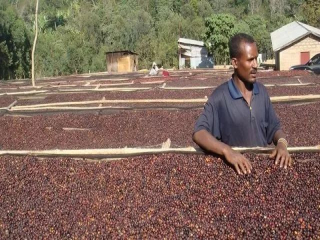
Ethiopian coffee bean grade introduction, why Ethiopian coffee beans are of different sizes?
Why do people usually buy Ethiopian coffee beans of different sizes? Even if it is the highest G1 coffee bean. Today I would like to explain to you why Ethiopian coffee beans are of different sizes. This involves Ethiopian coffee beans, and his grading has nothing to do with the size of coffee beans.
Coffee Encyclopedia beans and grading of Ethiopian Coffee
The grading we are talking about now refers to the grading of raw beans in the country where coffee is produced. (no matter which country coffee beans are not graded) Ethiopian coffee beans are divided into five grades. The first and second stages are reserved for washing beans with water. Grade 1 represents 0-3 raw beans and Grade 2 represents 4-12 missing beans per 300g raw beans. Grade 1 (G1) grade water washed bean pole

Characteristics of grinding degree of Ethiopian coffee with soft acidity introduction to flavor description of varieties
Grade of Ethiopian coffee: Ethiopian washed coffee Yega Chuefei G1 G2 Sidamo (Yirgacheffe, Sidamo) has the highest grades 2 and 3 (G2, G3), while sun-processed coffee in eastern Ethiopia is mostly grade 4 or 5 (G4, G5). In many cases, level 4 coffee is marked as level 5 in order to reduce taxes. At present, the classification is not uniform and there are

Coffee cup coffee cup test the basic knowledge of coffee tasting
1 scope this part defines the operation methods and result evaluation of coffee cups. This part is suitable for coffee quality identification. 2 normative citation documents the provisions of the following documents become the provisions of this part through the citation of this section. All subsequent corrections (excluding corrigendum) or revisions of dated references do not apply to this section, however
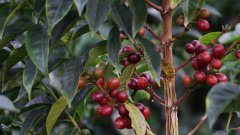
Cultivation conditions in Nicaragua SHG grade the most classic flavor of traditional coffee varieties
The global trend of modern coffee has gone through three popular stages: the first stage is the popularity of cheap coffee represented by instant coffee from the post-World War II to the 1960s; the second stage is the popularity of commercial coffee represented by Starbucks from the 1960s to the beginning of this century; the third stage is the popularity of boutique coffee, which originated in the 1970s and has become a trend in the past decade.
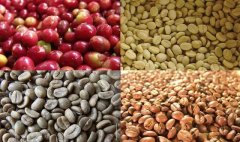
How are Ethiopian coffee beans graded?
The grading we are talking about now refers to the grading of raw beans in the country where coffee is produced. (no matter which country coffee beans are not graded) Ethiopian coffee beans are divided into five grades. The first and second stages are reserved for washing beans with water. Grade 1 represents 0-3 raw beans and Grade 2 represents 4-12 missing beans per 300g raw beans. Grade 1 (G1) grade water washed bean pole

Latin American Coffee Bean Characteristics Latin American Coffee Flavors
Latin America In 1721, Gabriel Mathieu de Clieu, a French naval officer, took the first coffee sapling from Africa to Martinique in Latin America. All this is the origin of coffee cultivation in Latin America. Because France was under Bourbon rule at that time, Latin America was planted

Latin American coffee growing region
Following Cafe Review (official Wechat account vdailycom) found that the Beautiful Cafe opened a small shop of its own in Latin America (Latin America). In 1721, French naval officer Gabriel Mathieu de Clieu went through hardships and obstacles to bring the first coffee sapling from Africa to Martinique in Latin America, all of which was grown in Latin America.
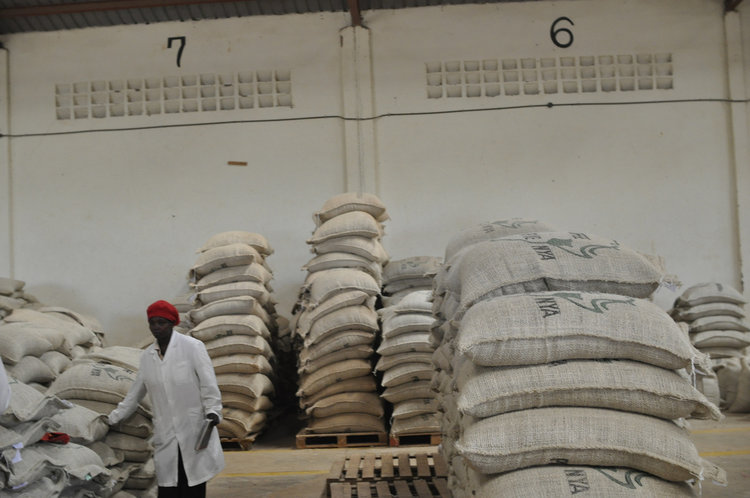
Yega Sheffield Wauka Coffee beans Flavor characteristics of Yega Chuefei Water washed Wauka Coffee beans
Yega Xuefei's coffee trees were planted by European monks (somewhat similar to Belgian monks who advocated planting wheat and brewing beer), and were later transferred to farmers or cooperatives. Yega Xuefei is actually built by surrounding coffee communities or cooperatives, including Edido, Hafusha, Hama and Bdon near the Fog Valley. Most coffee beans are washed with water, but also
Analysis of Chinese Coffee quality and grading of Yunnan Coffee
Yunnan coffee specific quality: raw coffee bean appearance requirements: the color should be light blue or light green, with luster, fresh smell, no sour and odor and other peculiar smell, round or oval. Coffee rice classification: with screening extension, machine sieve, sieve hole 6.5, 6.0, 5.5, 5.0 mm is divided into five levels, each level has a standard sample, which is the lowest standard sample. Level I: above 6.5mm
Latin American coffee introduction to coffee producing areas
Latin America (Latin America) in 1721 French naval officer de Klee (Gabriel Mathieu de Clieu) experienced difficulties and obstacles to bring the first coffee sapling from Africa to the Latin American island of Martinique, which was the origin of coffee cultivation in Latin America. Because at that time, France was under the reign of the Bourbon dynasty, and what was grown in Latin America
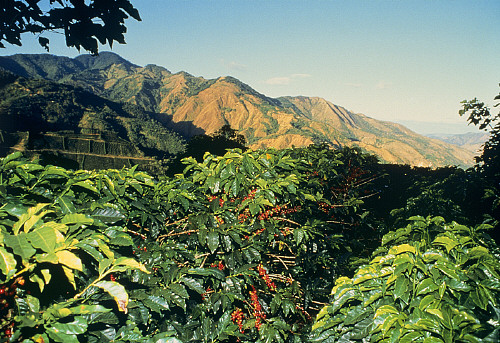
Introduction of boutique coffee producing area in Latin America
Latin America (Latin America) in 1721 French naval officer de Klee (Gabriel Mathieu de Clieu) experienced difficulties and obstacles to bring the first coffee sapling from Africa to the Latin American island of Martinique, which was the origin of coffee cultivation in Latin America. Because at that time, France was under the reign of the Bourbon dynasty, and what was grown in Latin America

Introduction of boutique coffee beans Latin American coffee
Latin America (Latin America) in 1721 French naval officer de Klee (Gabriel Mathieu de Clieu) experienced difficulties and obstacles to bring the first coffee sapling from Africa to the Latin American island of Martinique, which was the origin of coffee cultivation in Latin America. Because at that time, France was under the reign of the Bourbon dynasty, and Elaraby was grown in Latin America.
Latin American coffee beans characteristics Coffee beans import sour Chinese coffee net
Latin America In 1721, Gabriel Mathieu de Clieu, a French naval officer, took the first coffee sapling from Africa to Martinique in Latin America, which is the origin of coffee cultivation in Latin America. Because France was under Bourbon rule at the time, Arabi cultivated in Latin America

Characteristics of Latin American coffee beans Latin American coffee flavor
Latin America (Latin America) in 1721 French naval officer de Klee (Gabriel Mathieu de Clieu) experienced difficulties and obstacles to bring the first coffee sapling from Africa to the Latin American island of Martinique, which was the origin of coffee cultivation in Latin America. Because at that time, France was under the reign of the Bourbon dynasty, and what was grown in Latin America